


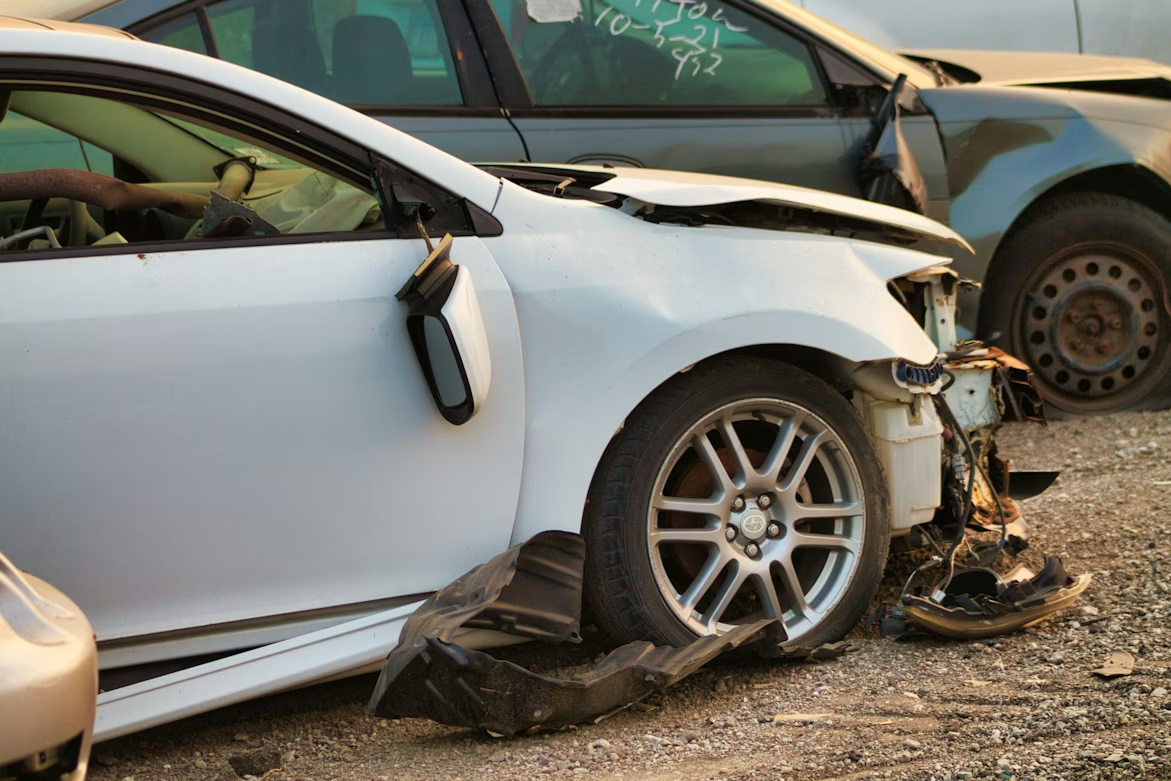
In California, crash claims evaluation heavily relies on incident documentation. Whether a collision results in minor injuries or significant damage, the information collected immediately after the incident and throughout the claims process becomes the foundation for determining fault, assessing damages, and supporting legal arguments. California’s liability system places a strong emphasis on evidence, making clear and organized documentation especially valuable for anyone seeking compensation. The following sections explain why thorough documentation is essential and how it strengthens the claim process.
Establishing an Accurate Account of the Collision
Accident documentation serves as the first and most critical step in establishing what happened, who was involved, and under what conditions the crash occurred. Photographs of the scene, debris patterns, weather conditions, and vehicle positions help create a detailed record that preserves facts which might otherwise be forgotten or altered with time. Similarly, witness statements offer independent perspectives that may support or clarify your account. When these early details are preserved properly, they provide a strong factual baseline for insurers and attorneys reviewing the claim. That baseline becomes even more important later, when the timeline of events is reexamined or if disagreements arise regarding liability.
Supporting Liability Determinations in a Fault-Based System
California follows a fault-based model, meaning that compensation typically depends on identifying which party contributed to the crash and to what degree. Documentation becomes essential in demonstrating the actions taken by each driver, the visibility or signage at the location, and any contributing hazards. Insurance adjusters and legal representatives rely heavily on this information when evaluating fault. In many cases, written and visual evidence helps establish the conditions under which the collision occurred, providing clarity when recollections differ. One important component is reviewing the highway patrol accident report in California, which helps identify observations made by the responding officer and supports the broader evidentiary picture created by your own documentation.
Strengthening Injury Claims and Medical Assessments
Injury claims depend on clear connections between the crash and the physical harm suffered. Documenting injuries early, through both photographs and medical evaluations, helps establish that link. Medical records documenting symptoms, diagnoses, and treatment plans form a detailed chronology that supports injury-related claims. When injuries worsen over time or lead to long term impairment, early documentation ensures the impact of the crash remains traceable to the incident. Without medical records, claimants risk gaps in their documentation that insurers may question or use to reduce responsibility. Consistency and thoroughness help demonstrate both the severity and progression of injuries.
Organizing Financial Losses and Damage Assessments
A critical part of any crash claim involves documenting economic losses. This includes repair estimates, mechanic evaluations, rental car fees, towing charges, and receipts for out-of-pocket expenses. Organizing these items ensures that each financial loss is accounted for during negotiations. When documentation is incomplete or scattered, it becomes more difficult to justify the full value of claimed damages. Thorough documentation also supports claims related to diminished vehicle value or replacement needs. By presenting complete and organized financial records, claimants create a clear picture of the economic impact caused by the crash.
Building a Strong Foundation for Legal Representation
When claims escalate into disputes or litigation, attorneys rely heavily on the documentation collected in the early stages. Comprehensive records allow legal teams to build persuasive arguments, identify patterns or inconsistencies, and prepare for counterarguments from opposing parties. Strong documentation enables attorneys to recreate the event, demonstrate negligence, and support damages with tangible evidence. Without it, even strong claims can weaken under scrutiny. Attorneys often emphasize that proper documentation maximizes the effectiveness of legal representation and improves the likelihood of achieving a fair resolution.
Conclusion
Incident documentation plays an indispensable role in California crash claims, influencing everything from fault assessments to compensation outcomes. Through photographs, reports, statements, medical records, and financial documentation, claimants can create a detailed and credible account of the crash and its aftermath. Thorough documentation supports both insurance negotiations and potential legal action, helping ensure that the facts of the incident are accurately presented and fairly evaluated. With consistent and organized efforts, individuals can strengthen their claims and better protect their rights throughout the process.