


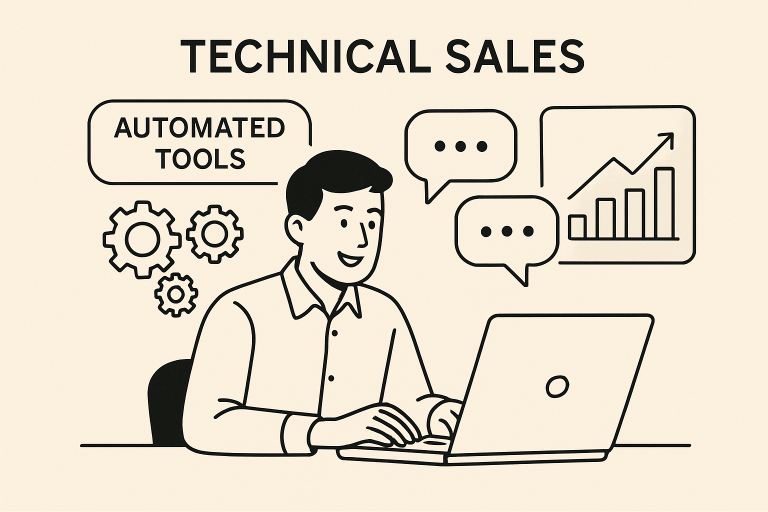
In today’s competitive marketplace, automation has rapidly emerged as a game-changer for technical sales teams. This digital shift brings new opportunities for efficiency and improved client relationships. As companies look to grow their bottom line, integrating sales automation is becoming vital. While it unlocks numerous advantages, organizations must navigate the right tools and strategies to truly excel. Solutions like LoTech Sales are helping professionals streamline workflows and free up time for higher-impact activities.
Technical sales has traditionally required a blend of technical expertise and strong interpersonal skills. Now, with advanced software and artificial intelligence, manual tasks and guesswork are quickly being replaced. Automation not only optimizes processes but also allows teams to better connect with buyers, provide timely follow-ups, and close more deals. Leveraging automation gives sales professionals a vital edge in a dynamic market.
The Shift Towards AI-Driven Sales Processes
Artificial intelligence is fundamentally altering how technical sales teams operate. With the power to analyze massive data sets, AI identifies promising leads, predicts buying intent, and helps devise tailored sales strategies. This data-driven approach makes sales outreach more relevant and productive, often resulting in higher conversion rates compared to traditional methods. Info-Tech Research Group reports that implementing AI-driven sales automation can boost operational performance while improving customer interactions in meaningful ways. Companies lagging in automation risk losing market share to faster-moving competitors who are embracing these tools.
Enhancing Lead Generation and Qualification
Lead generation and qualification are critical components of technical sales. Automation platforms monitor industry triggers, research prospective accounts, and assess a lead’s value based on predefined metrics. This enables sales reps to focus on prospects most likely to convert while minimizing wasted effort. With AI-powered assistants, teams can personalize outreach at scale, react quickly to engagement signals, and nurture relationships through automated yet personalized workflows.
For instance, sales automation tools can automatically track changes with a prospect’s organization, flag buying signals, and update customer records across platforms. This level of insight ensures that no high-value opportunity falls through the cracks. In many cases, automation reduces the lead qualification cycle from days to hours. By integrating AI into their stack, sales teams position themselves to proactively respond to opportunities as they arise.
Improving Customer Engagement Through Personalization
Personalization remains one of the best ways to build trust in the sales process. Automation takes personalization to the next level. AI authentication tools assess customer preferences, past interactions, and pain points. This insight equips sales professionals to offer bespoke solutions that resonate with client needs. By automating reminders, tailored follow-up messages, and content delivery, teams can maintain high-touch engagement across every stage of the sales funnel without overwhelming administrative tasks.
Streamlining Sales Operations
Sales operations involve a multitude of routine tasks such as data entry, scheduling calls, updating records, and managing handoffs between departments. Automation can handle these transactional processes, allowing teams to operate more efficiently. As more tasks are automated, the risk of human error diminishes, and productivity grows. Shorter sales cycles not only help organizations scale but also improve the customer experience. According to Harvard Business Review, streamlining repetitive work through automation helps high-performing sales teams outperform their peers.
Integrating Automation with Existing Systems
Adopting automation does not mean overhauling your entire tech stack. The most successful implementations are those that integrate seamlessly with existing CRM and sales management applications. Solutions now feature built-in AI modules tailored for technical sales. Integrating automation tools ensures consistent data flows, centralized insights, and a unified customer experience. This approach allows sales engineers and account managers to spend more time solving complex business challenges for clients, rather than getting bogged down by administrative details.
Overcoming Challenges in Automation Adoption
Despite the benefits, adopting automation in technical sales can create some hurdles. Common obstacles include resistance from team members accustomed to legacy systems and concerns about losing the human touch in sales. Overcoming these challenges requires clear communication about the value of automation and robust employee training to build confidence with new tools. Organizations that invest in change management and prioritize a smooth transition are more likely to see sustained improvements in productivity and morale.
The Future of Technical Sales
Looking ahead, automation and AI will play an even greater role in the evolution of technical sales. As new tools emerge and buyer expectations shift, adaptability will shape which organizations maintain their competitive edge. Teams that embrace automation can expect to win more business, provide higher-value solutions, and respond more strategically to marketplace changes.
Automation’s true potential lies not just in replacing repetitive labor but in empowering sales professionals to focus on what they do best: solving problems and nurturing relationships. Technical sales teams that invest in automation today will be better equipped for tomorrow’s challenges.