

Key Takeaways
- RV living provides a unique blend of mobility and comfort, enabling travelers to explore various destinations without sacrificing the conveniences of home.
- Advancements in RV technology, such as solar panels and Wi-Fi boosters, have enhanced the off-grid capabilities and connectivity for modern travelers.
- The rise of remote work has contributed to the increasing popularity of RV living, allowing individuals to work from virtually anywhere.
- Economic factors, including rising housing costs, have led more people to consider RV living as a viable and cost-effective alternative.
- Embracing RV living requires careful planning and adaptability, yet it offers a rewarding, enriching travel experience.
RV living has revolutionized the way people experience travel across the country, creating opportunities for adventure, comfort, and flexibility that are hard to match with traditional travel methods. With a home on wheels, travelers are no longer bound by rigid itineraries or hotel reservations and can instead enjoy spontaneous detours and extended stays in destinations that spark their interest. Learn more about how this lifestyle opens doors to exploring the world in comfort.
The surge in interest in RV living also reflects broader trends in how people seek connection, both with the environment and each other. Whether you are escaping city life or embracing remote work opportunities, RV living brings a sense of freedom and flexibility while maintaining the conveniences of home. As this mode of travel grows in popularity, technological advancements and a vibrant RV community have made it more accessible and rewarding than ever.
Modern travelers are discovering that living on the road is not just a way to see new places but a holistic lifestyle that merges mobility, convenience, and the ability to shape one’s own journey. As economic factors and remote work reshape life’s priorities, RV living stands out as a practical and enriching alternative to conventional housing. With some planning and adaptability, it offers endless possibilities for self-discovery and adventure.
Freedom and Flexibility
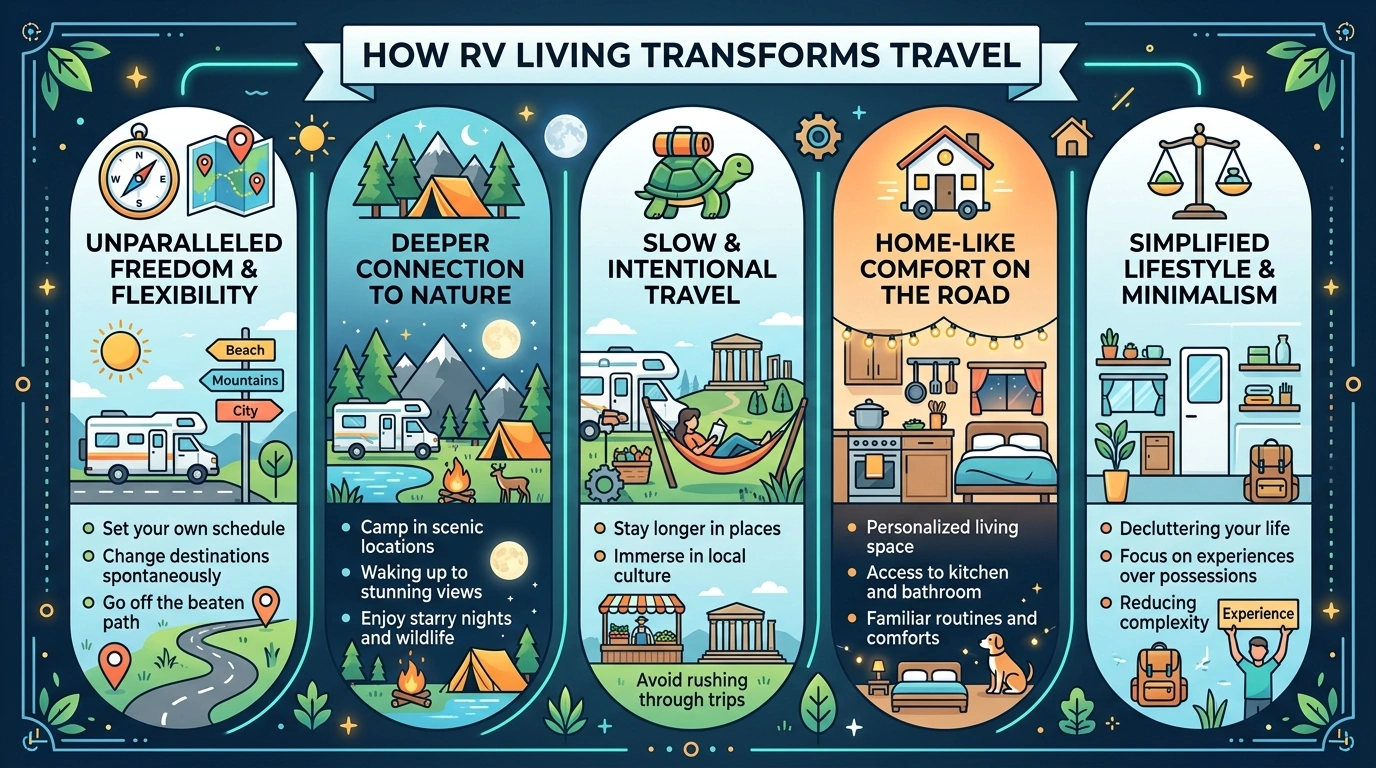
The main appeal of RV living is its ability to offer travelers true freedom and flexibility. It eliminates fixed hotel bookings, crowded spots, and tight schedules. RV owners choose their own paths; if a mountain vista calls for longer stays or a roadside attraction attracts their interest, plans change easily. This flexibility encourages independence and adventure. Having familiar comforts like a kitchen, bed, and bathroom reduces stress and logistical issues that come with travel.
Both families and solo travelers can customize routes and schedules, making each journey personal. Whether exploring national parks or small towns, travelers gain a sense of control often missing in traditional vacations. This mobile lifestyle fosters deeper connections to destinations and enhances the journey experience.
Technological Advancements
Modern RVs feature advanced tech that boosts comfort and capability. Solar panels enable off-grid travel while powering appliances. Wi-Fi boosters and satellite kits keep travelers connected in remote areas. Innovations in climate control, security, and entertainment make road life convenient and fun. Today’s RVs may include touchscreen controls, smart storage, and energy-efficient systems, rivaling stationary homes. Advanced navigation systems and travel apps aid trip planning, safety, and the discovery of hidden gems. These advancements make RV travel more accessible and hassle-free for even first-time owners.
Remote Work and Digital Nomadism
Remote work and digital nomadism are transforming, fitting RV living well. As more pros go online, the need for a fixed address or daily commute decreases. RV living enables work on the road, combining productivity with adventure. Reliable internet and adaptable spaces support calls, meetings, and projects from almost anywhere. This lifestyle appeals to freelancers, entrepreneurs, and employees seeking better work-life balance. Traveling while working is now achievable for digital skills and travel lovers. Moving seasonally or following the sun boosts satisfaction outside traditional offices.
Economic Considerations
Rising housing costs are pushing more people to consider long-term RV living, as it offers financial benefits such as avoiding rent, mortgages, and utility bills. While initial costs are associated with purchasing and setting up an RV, owners often save money over time. Traveling without flights or hotel stays allows flexible budgeting, with many using free or low-cost campsites and cooking at home to cut daily expenses. The mobility to relocate for jobs or cheaper areas adds an economic edge to RV living.
Community and Social Connections
The allure of the open road does not mean sacrificing community. In fact, RV living frequently fosters deep social connections, both in campgrounds and through online forums. Many RV parks host regular events, communal cookouts, and group activities that foster new friendships. Travelers share stories, tips, and camaraderie, creating a supportive network across the country.
Social media has amplified opportunities for connection by making it easy to join interest-based RV groups, coordinate meetups, and swap advice. These connections can be a lifeline for solo travelers or families adjusting to life on the move, making the RV lifestyle feel less isolating and more socially rewarding.
Sustainability and Environmental Impact
Sustainability is an increasing concern among travelers, and the RV community is taking steps to minimize environmental impact. Many RVers invest in solar panels, practice responsible waste disposal, and use renewable resources when possible. Some are opting for smaller, more fuel-efficient models and limiting long drives to reduce emissions. By adopting these practices, RVers help to ensure that national parks and wilderness areas remain vibrant for future generations.
There is also a growing trend toward using eco-friendly products and volunteering to maintain public lands. This consciousness adds purpose to travel, blending enjoyment of nature with active stewardship.
Challenges and Considerations
RV living offers benefits but also presents challenges, such as vehicle maintenance, access to water and electricity, limited space, and parking issues near cities and during peak seasons. Adapting requires creative organization and minimal belongings. Prospective RVers should research, understand the lifestyle limits, and prepare for repairs and travel changes.
Conclusion
RV living has transformed modern travel, making adventure accessible without giving up the comforts of home. Technological advancements and new attitudes toward remote work have made a mobile lifestyle practical for more people than ever before. As the RV community grows and embraces sustainability and inclusivity, this lifestyle continues to redefine what freedom on the road truly means. Anyone seeking flexibility, connection, and a deeper connection with their journey will find RV living a rewarding path to explore.