


Table of Contents
- Introduction
- Enhancing Operational Efficiency
- Cost Savings and Resource Optimization
- Scalability and Flexibility
- Improved Customer Experience
- Strengthening Security and Compliance
- Facilitating Remote Work and Collaboration
- Driving Innovation Through AI and Automation
- Conclusion
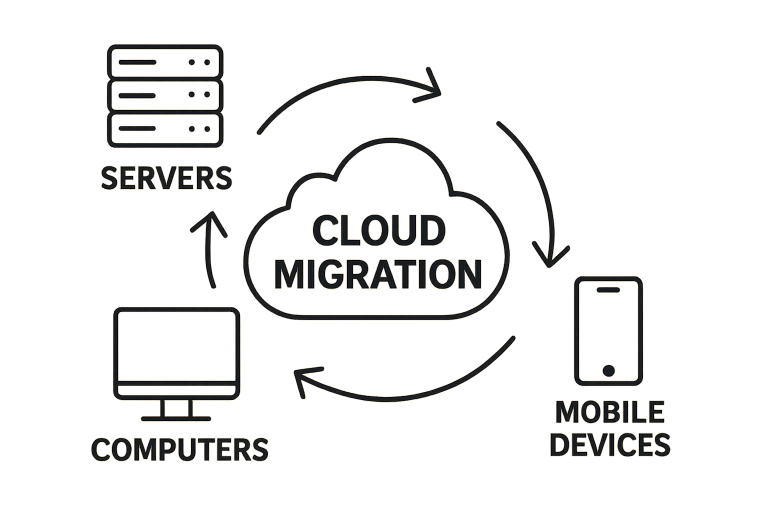
Modern organizations are under increasing pressure to stay ahead in a digital-first market. This challenge calls for innovative solutions that enhance efficiency, drive growth, and build resilience, especially as competition intensifies across all industries. Among the most impactful strategies at a company’s disposal is cloud migration, which involves moving data, applications, and workloads from outdated on-premises systems to advanced cloud-based environments. This shift empowers organizations to adapt more swiftly to changing business demands, streamline operations, and deliver enhanced services to their clients. For organizations considering transformation, embracing Microsoft cloud migration offers distinct advantages that touch nearly every aspect of business operations, from IT infrastructure to customer engagement and workforce productivity.
The cloud is significantly transforming business processes, driving digital transformation, and offering a competitive edge through enhanced flexibility and agility. Its adoption streamlines workflows by integrating tools and automating tasks, allowing staff to focus on strategic initiatives while reducing costs and overhead. Beyond data storage, cloud migration enables dynamic scaling and pay-as-you-go models, resulting in optimized computing and cost. Automation enables quicker, more accurate product delivery and greater adaptability to market changes. As organizations increasingly move towards cloud technologies, over 85% are expected to adopt a cloud-first approach by 2025, marking a shift towards modern solutions crucial for success in a digital economy.
Enhancing Operational Efficiency
Cloud migration significantly boosts operational efficiency by automating and centralizing management, enabling programmatically handling tasks that once required extensive human intervention. By leveraging cloud-based tools, companies can minimize repetitive manual tasks, increase workflow reliability, and reduce operational bottlenecks. For example, automated backups, patch management, and software updates reduce the administrative burden on IT teams, lowering the risk of errors and ensuring systems are always up to date. In addition, cloud-native integrations allow for quicker deployment of new solutions—meaning businesses can roll out capability upgrades or respond to customer needs faster than ever. These enhancements, collectively, contribute to a more responsive and productive organization, ultimately improving output across departments, reducing operational downtime, and streamlining internal communications.
Cost Savings and Resource Optimization
Optimizing operating costs and sharpening resource allocation are major advantages of migrating to the cloud. Traditional on-premises infrastructure requires significant capital investments in servers, physical space, and utilities, combined with regular maintenance and upgrade costs that accumulate over time. Companies that adopt the cloud can scale back or even eliminate these expenses, diverting funds that would have been spent on hardware and maintenance toward innovation and core business growth. Cloud computing uses a subscription model, translating technology expenses into predictable operational costs and making budgeting far simpler. Research from McKinsey & Company shows that cloud adoption can cut IT spending by up to 30 percent. Additionally, optimized resource allocation means companies pay only for what they use, avoiding over-provisioning and maximizing the value of every dollar spent. This allows organizations to invest in transformative projects and scale initiatives without fear of unnecessary IT overhead.
Scalability and Flexibility
Cloud computing provides businesses with unmatched scalability and flexibility, enabling them to quickly expand or contract resources in response to real-time business demands and market changes. Unlike traditional IT infrastructures, which can take weeks or even months to scale and require upfront investment in expensive new hardware, the cloud allows businesses to adjust capacity almost instantly through a few clicks or automated processes. This scalability is vital for organizations facing fluctuating demand or seasonal traffic spikes, ensuring that computing resources match requirements without delay or disruption. The cloud’s flexible nature also enables more agile innovation, enabling the rapid development and deployment of new products or services. Businesses can experiment and iterate at lower risk and cost, making them more adaptable and competitive regardless of industry or market conditions.
Improved Customer Experience
Delivering personalized, responsive, and efficient customer service is much easier and more effective on the cloud. Centralized cloud platforms support unified data management, allowing staff to access accurate customer information in real time. This single source of truth is essential for delivering targeted, context-aware, and meaningful customer interactions at every touchpoint. Many organizations now use advanced analytics and AI-powered insights available through cloud platforms to anticipate and exceed client expectations, such as predicting customer preferences or proactively addressing issues. Additionally, cloud infrastructure supports rapid deployment of new channels for engagement, such as chatbots, self-service portals, or mobile apps, enabling customers to communicate in the ways they prefer. Collectively, these capabilities lead to deeper loyalty, greater retention, and overall enhanced customer satisfaction, giving businesses a distinct edge in saturated markets.
Strengthening Security and Compliance
Security remains a primary concern for organizations considering a move to the cloud, but modern cloud providers invest heavily in advanced protections that often surpass what organizations can deploy in-house. Features such as end-to-end encryption, robust authentication protocols, and continuous threat monitoring help safeguard sensitive company and customer data. Additionally, leading cloud platforms are designed to comply with international and industry-specific standards, making regulatory compliance with mandates such as GDPR, HIPAA, SOX, or PCI DSS more manageable. Migrating to the cloud ensures sensitive data is protected against cyber threats, regularly backed up, and recoverable in the event of a disaster. Businesses benefit from enhanced monitoring, rapid threat detection, quick response mechanisms, and ongoing updates that address new vulnerabilities as they arise, all of which strengthen trust with clients, partners, and regulators alike.
Facilitating Remote Work and Collaboration
Cloud solutions have become vital for enabling effective remote work and seamless global collaboration, facilitating the rise of distributed teams and flexible work arrangements. By providing secure, real-time access to files, data, and core business applications from any device, the cloud enables mobility and ensures business continuity even during disruptions. Features such as real-time document collaboration, workflow automation, and integrated video conferencing tools help teams stay connected, aligned, and productive even when working apart. Additionally, cloud-based communication tools make it easier to collaborate with external partners and clients, expanding the organization’s reach and influence. This technology supports a flexible, inclusive workplace culture that attracts and retains top talent while reducing geographic constraints that might otherwise limit growth and opportunity.
Driving Innovation Through AI and Automation
With the cloud as a foundation, businesses can more easily access and leverage artificial intelligence (AI) and automation initiatives to drive unprecedented innovation. Cloud platforms offer advanced machine learning models and predictive analytics capabilities that empower organizations to turn raw data into actionable insights, supporting strategic decisions from marketing to logistics. Automated business operations enabled by the cloud reduce manual effort, improve accuracy, and accelerate workflows, allowing employees to focus on more impactful tasks. These innovations enable companies to identify new revenue opportunities, personalize customer targeting, optimize supply chains, and remain ahead of rapidly changing market dynamics. By integrating AI and automation through the cloud, businesses unlock a continuous cycle of improvement and innovation that creates long-term value and differentiation.
Conclusion
Cloud migration is much more than a simple IT project; it is an essential step toward modernizing business processes, reducing costs, and achieving sustainable growth for organizations of all sizes. Whether a company seeks improved efficiency, enhanced security, or greater agility, moving to the cloud unlocks transformative opportunities and creates lasting value for employees, customers, and stakeholders. As organizations look to the future, cloud adoption offers a resilient, secure, and flexible foundation for digital transformation and positions businesses for success in an increasingly digital, interconnected world.