

As organizations navigate constant technological advancements and shifting workforce expectations, creating a resilient digital workplace is more critical than ever. A well-structured digital workplace brings together people, technology, and processes, offering enhanced flexibility, security, and scalability. By laying the right foundation, businesses can future-proof their operations and maintain a competitive edge. Companies such as iVenture Solutions help firms successfully architect and maintain these robust environments. As employee needs and enterprise security evolve in tandem, businesses must proactively address both to succeed.
Developing a resilient digital workplace is not just about adapting to new technology, but also about aligning these advancements with core business objectives. A successful digital workplace relies on streamlined access, effective automation, cloud infrastructure, and, most importantly, the empowerment of people. In this guide, we will explore the essential pillars for building and sustaining a truly resilient modern workplace.
Implement Smart Access Control Systems
Access control has moved far beyond the days of physical keys and simple security codes. Today’s business landscape requires intelligent, adaptive access systems that safeguard both physical locations and digital resources. Vulnerabilities in traditional key fobs and swipe cards highlight the need for advanced alternatives. By integrating smart cards using RFID or NFC, organizations can implement tamper-resistant encryption, ensuring access is granted only to authorized individuals. For heightened protection, biometric solutions such as fingerprint and facial recognition are becoming the gold standard, given their immunity to loss or duplication. With mobile wallet credentials and secure smartphone authentication, businesses further streamline operations while reducing administrative overhead. Transitioning to these advanced systems not only secures assets but also positions organizations for scalable growth.
Adopt a Zero-Trust Security Model
The shift toward remote and hybrid work environments calls for a dramatic rethinking of security strategies. The zero-trust security model assumes that every user, device, and application is a potential threat unless continually authenticated. Rather than relying on traditional network perimeters, zero-trust models verify each request, regardless of location or network status. This minimizes the attack surface and prevents unauthorized access to sensitive information. With rising incidents of data breaches and cyberattacks reported by major publications like The New York Times, adopting zero-trust is now a baseline expectation for all digital-first businesses. Implementing robust multifactor authentication, continuous monitoring, and granular policy controls are among the first steps to operationalizing this approach and ensuring business continuity.
Prioritize Change Management
Organizational change has traditionally been one of the biggest hurdles to technology adoption. Resistance, lack of awareness, and skill gaps often stall progress. Employing frameworks such as the ADKAR model (Awareness, Desire, Knowledge, Ability, Reinforcement) can systematically guide employees through new processes, minimizing friction and maximizing buy-in. Training and communications must be treated as ongoing priorities, not one-time events. By establishing change champions within the organization, leadership can promote flexibility, acceptance of disruption, and a readiness to pivot as digital needs evolve. According to research by the Harvard Business Review, sustained change management leads to higher success rates in digital transformation projects.
Embrace AI-Driven Automation and Analytics
Artificial Intelligence and automation are increasingly central to the modern digital workplace. AI enhances the capacity for data-driven decision-making by transforming massive datasets into actionable insights. With AI-powered automation platforms, businesses can streamline repetitive processes, improve accuracy, and redeploy human capital to higher-value tasks. For example, intelligent workflows and predictive analytics enable organizations to anticipate market shifts and address challenges proactively. According to TechCrunch, leveraging AI-driven workplace solutions can deliver meaningful productivity gains and enhanced operational agility without compromising user experience or data security.
Invest in Secure and Scalable Cloud Infrastructure
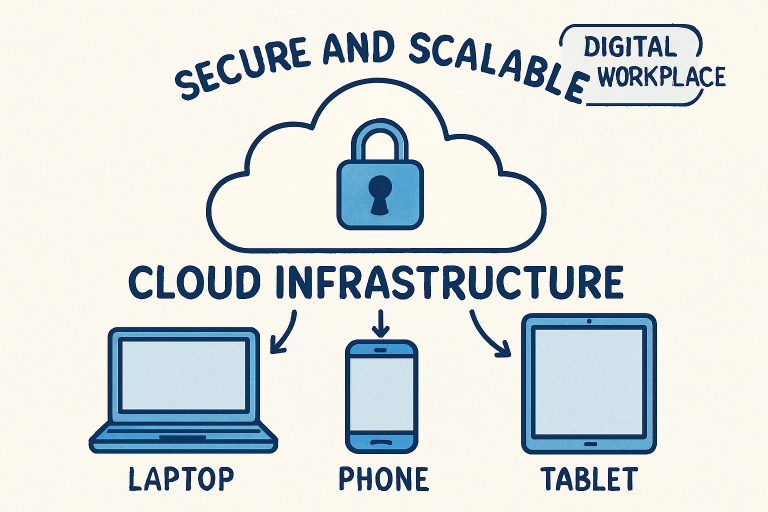
The backbone of a resilient digital workplace lies in secure, robust, and scalable cloud infrastructure. Hybrid and multi-cloud models give organizations the flexibility to allocate resources efficiently and adapt to changing business requirements. Integrating cloud-based collaboration, storage, and security tools simplifies IT management and enables remote or distributed teams to securely access critical data. These architectures also support cost optimization by aligning spending with actual usage, enabling scaling up or down as demand fluctuates.
Prioritize a People-First Digital Experience
While technology is the engine of a modern workplace, people remain at its core. Employee experience drives productivity, engagement, and innovation. By implementing intuitive digital workplace platforms, businesses foster strong communication, collaboration, and continuous learning. Emphasizing mental and physical well-being, along with flexible arrangements and transparent communication, results in a more resilient workforce. According to Deloitte’s Human Capital Trends, organizations that prioritize employee experience outperform their competitors across a range of metrics, including innovation rates and customer satisfaction.
Final Thoughts
Modern businesses must adopt a holistic approach to build a resilient digital workplace. This includes implementing advanced access controls, embracing zero-trust security, and investing in transformative technologies such as AI and scalable cloud platforms. Equally vital is a commitment to comprehensive change management and placing employees at the center of digital experiences. By integrating these pillars, organizations will not only stay competitive but will also cultivate an adaptive culture ready to thrive amid ongoing digital disruption.